Applications for Identifying Plants Using Your Cell Phone
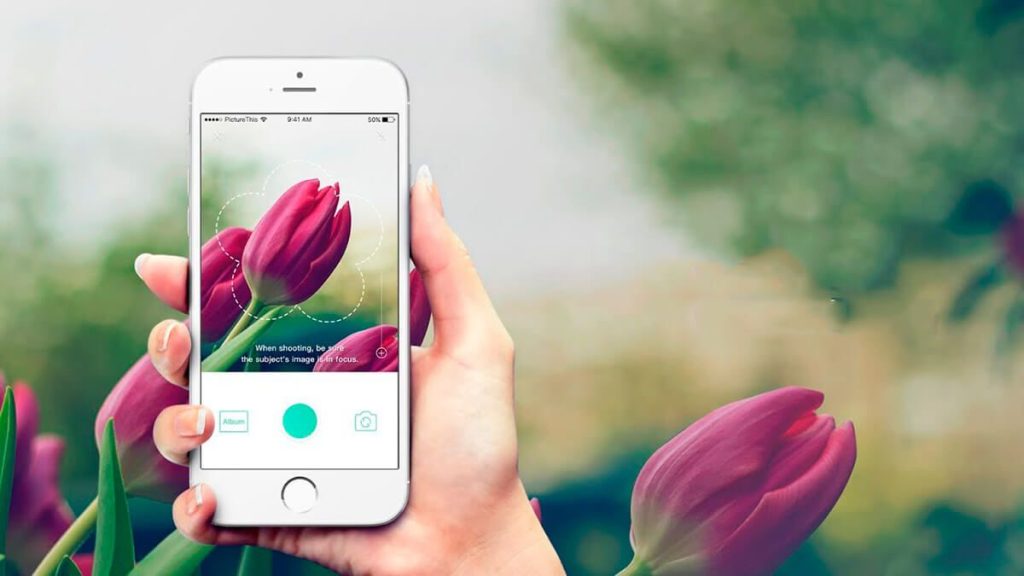
You see a beautiful flower on the sidewalk, a different leaf in the yard, or a tree you don't know the name of. Today, all you have to do is point your cell phone camera: plant identification apps compare your photo with image banks and return, in seconds, the probable name of the species and information about its care.
It's a great tool for anyone who enjoys gardening, hiking, or is simply curious. But it needs to come with a clear warning, and it's right at the beginning of this text because it's serious: Photo identification is not foolproof.. These apps work with probability, frequently make mistakes between similar species, and are not a substitute for the evaluation of a botanist. Never use the results of an app to decide whether to consume a plant, prepare tea, apply it to a wound, or harvest a mushroom.
How does photo identification work?
Behind the screen, the app sends your image to a visual recognition system trained on thousands of cataloged photos. It compares leaf shape, veins, flowers, fruits, and bark, and returns a list of candidate species—usually with a confidence percentage next to each one.
This detail is important and almost always ignored: the result is a list of hypotheses, This is not a definitive answer. When the app shows a confidence level of 62% for a species, it means it's unsure. It's always worth looking at the second and third suggestions and comparing the reference photos with the plant in front of you.
Accuracy also varies greatly by region. Most of these image banks were built in Europe and North America, and Brazilian flora, especially that native to the Cerrado, Caatinga, and Atlantic Forest biomes, is much less represented. Expect more accurate matches with common ornamental plants and more inaccuracies with native species.
5 apps to identify plants using your cell phone.
The five apps below are available on Google Play Brazil. The ratings and download numbers are those displayed in the store at the time of this review (August 2026) and may change. The buttons lead to each app's official page on Google Play.

App store listing: free to install, with ads and in-app purchases. Available for Android and iPhone.
O PlantSnap It was one of the first popular apps in its category and has a large database of species, including flowers, trees, succulents, and cacti. The operation is straightforward: take a photo, wait a few seconds, and receive a suggestion with the scientific name, common name, and basic cultivation information.
On Google Play Brazil, it has a 3.5 rating, over 95,000 reviews, and more than 10 million downloads, with ads and in-app purchases. The lowest rating on the list reflects common complaints about the limited number of identifications in the free version and the insistence on a subscription. It is also available on the Brazilian App Store, published by PlantSnap, Inc. under the same name, "PlantSnap: Identify Plants". It's a valid option, but it wouldn't be our first choice today.

App store listing: free to install, no ads, but with in-app purchases. Available for Android and iPhone.
O PictureThis It is currently the most popular and highest-rated commercial app in its category: a 4.7 rating on Google Play Brazil, over 786,000 reviews, and more than 50 million downloads. In addition to identifying pests, it diagnoses common problems (leaf spots, overwatering, pests) and sets up watering reminders.
It's free to install, ad-free, but with in-app purchases — and here's a word of caution: free IDs are limited, and the app offers a trial period with automatic renewal. If you're going to try it, note the date and cancel through the store if you don't want to continue. It's also available on the Brazilian App Store under the name "PictureThis - Flores e Árvores".

App store listing: free, ad-free, and no in-app purchases. Available for Android and iPhone.
If you want the best value for money, this is it. PlantNet It is a scientific project maintained by French research institutions, including CIRAD and INRAE, and is completely free: no ads and no in-app purchases. On Google Play Brazil it has a rating of 4.7, more than 263,000 reviews and more than 10 million downloads.
He asks you to indicate what It's photographing—leaf, flower, fruit, bark, or entire plant—and this greatly increases accuracy. It also allows you to choose the reference flora, and there's a specific database for useful plants and tropical regions, which is helpful in Brazil. The submitted photos feed into the project's scientific database, so you contribute to research by using it. It's also available on the Brazilian App Store, where it appears as "PlantNet," published by Cirad itself.

App store listing: free, ad-free, and no in-app purchases. Available for Android and iPhone.
O iNaturalist It has the most unique proposition on the list. It's not just an identifier: it's a global citizen science network where the observations you record are reviewed by other users and experts. Automatic suggestion exists, but the real value lies in human confirmation—when several researchers agree on the identification, it gains "research-grade" status and can be used in studies.
This makes it the most reliable option when you need a well-founded identification, with the drawback that it's not instantaneous: the review can take hours or days. It works for plants, but also for insects, birds, and fungi. It's free, without ads or in-app purchases, with a 4.5 rating and over 5 million downloads on Google Play Brazil. It's also available on the Brazilian App Store, published by the iNaturalist organization itself.

App store listing: free, with ads and no in-app purchases. It's the only one on the list without an official iPhone version.
O Plantix It has a different focus: instead of identifying any plant, it is geared towards agricultural crops and the diagnosis of diseases, pests, and nutritional deficiencies. You photograph the diseased leaf and it suggests the likely cause, with management guidelines. It is widely used by small producers.
On Google Play Brazil, it has a 4.6 rating, over 115,000 reviews, and more than 10 million downloads; it's free but includes ads. This is the only one on the list available exclusively for Android—there is no official version on the Brazilian App Store. An important warning: the app's diagnosis is a suggestion. Before applying any pesticide, consult an agricultural engineer, as product and dosage recommendations require a prescription and technical responsibility.
How to take photos to increase your chances of getting it right
Most identification errors come from the photo, not the app. A few simple precautions greatly improve the results:
- Photograph one part at a time. A single leaf, a flower, a fruit. A photo of the entire bush confuses the system.
- Get closer and focus. The leaf vein and the center of the flower are the most informative clues.
- Use a neutral background. A leaf against the ground or against your hand works better than against other leaves.
- Avoid backlighting and direct sunlight. Diffuse shadow reveals the true color.
- Send more than one photo. When the app allows it: including leaf, flower, and stem together greatly improves accuracy.
- Check out the alternatives. If the confidence level is low, compare the first three suggestions with reference photos before drawing a conclusion.
Never consume a plant identified by an app.
This is the most important point of the article. There are edible plants that are practically identical to toxic plants, and the difference between them is sometimes in a detail that doesn't even appear in the photo. The most dangerous case is that of... mushroomsDeadly species can visually resemble edible species very closely, and serious poisonings due to misidentification are recorded worldwide every year. No app should be used to decide what to harvest and eat.
The same applies to medicinal use. Tea, tincture, poultice, and "home remedies" with plants identified by photo are an unnecessary risk—especially since plants with the same common name may be different species in different regions of Brazil. If you are seeking therapeutic use, talk to a healthcare professional.
And, in case of suspected plant or mushroom poisoning, seek medical attention immediately and bring a sample or photo of the material. In Brazil, Poison Control Centers can be contacted by phone. Poison Control Center: 0800 722 6001, from the Ministry of Health.
It's also worth noting: collecting plants in conservation units and protected areas is prohibited, and several native Brazilian species are under restriction. Photographing and identifying them is allowed; uprooting them is not.
Conclusion
For general use and without spending anything, PlantNet is the best recommendation: it's truly free, maintained by research institutions, and more accurate when you specify which part of the plant you're photographing. If you want plant health diagnoses and care reminders, PictureThis is the most complete, although it requires a subscription. iNaturalist is the most reliable when identification needs to be well-founded, and Plantix is suitable for those who work with crops.
Use these apps for what they are: an excellent gateway to learning more about the plants around you. For curiosity, gardening, and learning, they're great. But never for deciding what goes into your body.